
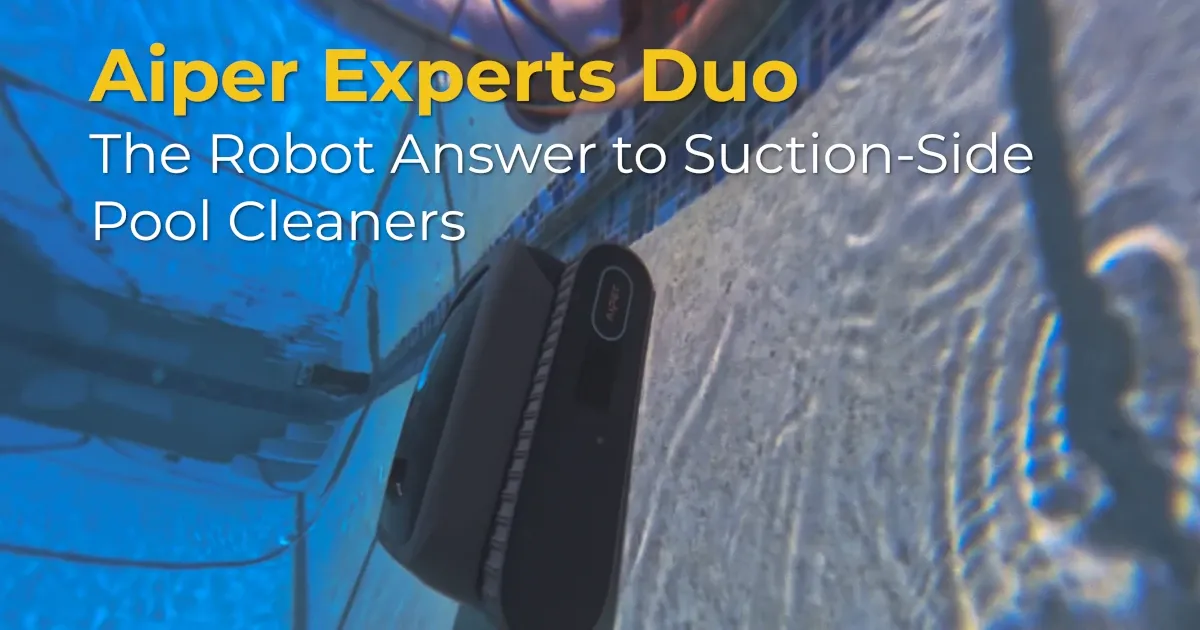
Aiper Experts Duo Review: Worth the Upgrade?
I replaced my Poolvergnuegen suction-side cleaner with the Aiper Experts Duo robotic pool cleaner (Scuba V3 + EcoSurfer S2). Unboxing, first-week results.
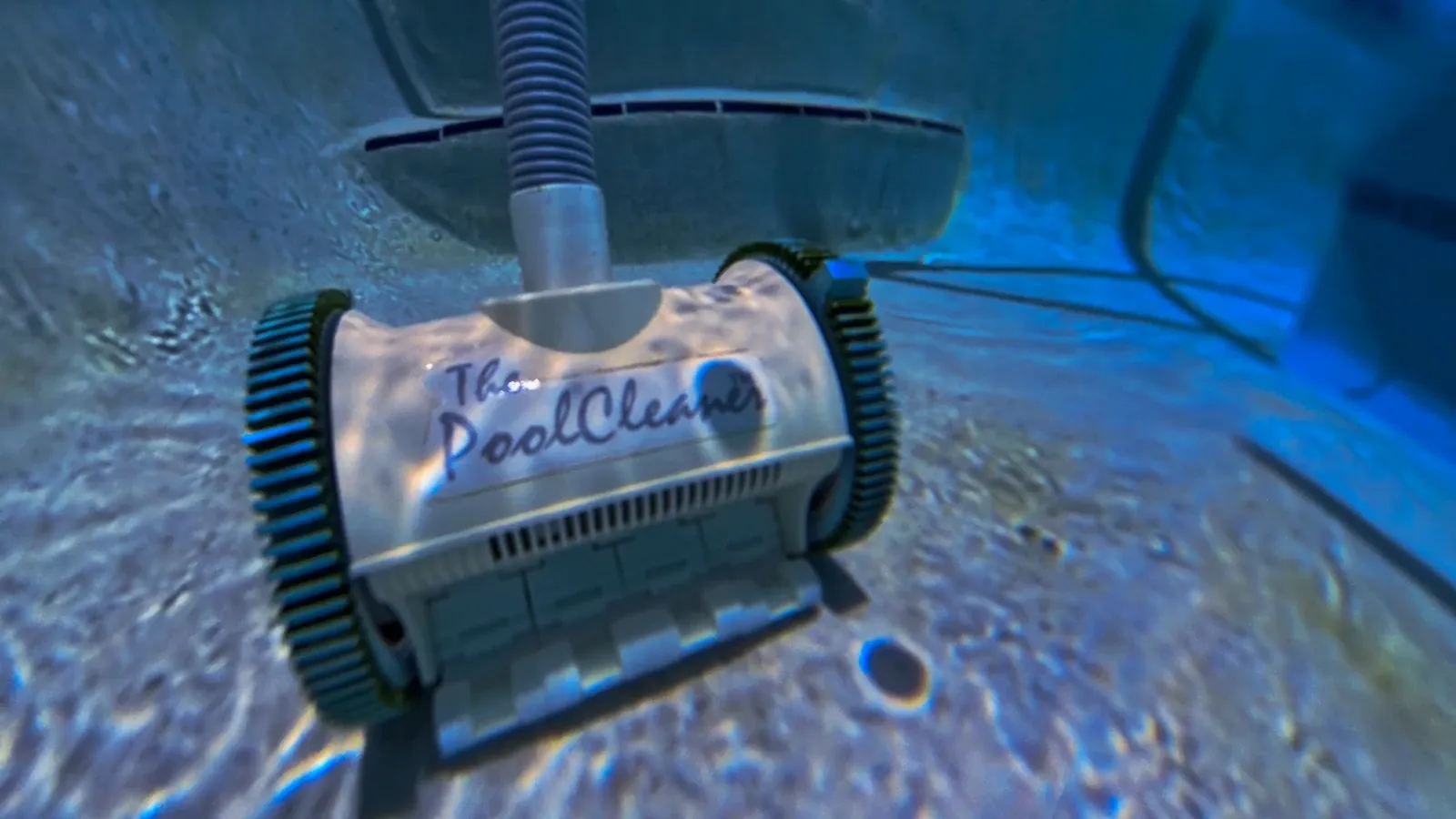
For years I cleaned my pool with a Hayward Poolvergnuegen ("The Pool Cleaner"), a passive suction-side cleaner that connects to the pump and crawls the pool floor using nothing but suction. It did an okay job. It never did a great job, and when the wheel bearings finally gave out on one side, I had to decide whether to rebuild it again or finally make the jump to a robotic cleaner. I went with the Aiper Experts Duo, the Scuba V3 floor and wall robot paired with the EcoSurfer S2 solar surface skimmer. Like many, I struggled with the buying decision: are battery-powered pool cleaners mature enough? Are they worth the premium? Will they last?
This article covers my buying decision for the Aiper robots, the unboxing, and what happened the first time I put both in the water.
What I Was Replacing
My pool actually started with a Kreepy Krauly, a suction-side cleaner with almost nothing to it mechanically, just a diaphragm doing the work. It kept the floor reasonably clean and there was barely anything to maintain, but the diaphragm needed replacing once or twice a year, it constantly got stuck on the main drain cover, and it never climbed the walls. I eventually switched to the Hayward Poolvergnuegen, which was a real improvement. It covered more of the pool without getting stuck, and the main drain stopped being a problem.
It still had two issues I never solved. Wall climbing was poor, and the deep end, the part of my pool farthest from the suction port, almost never got cleaned. I ended up brushing the walls and deep end by hand more often than I wanted to admit for a "self-cleaning" pool. I also don't have a dedicated suction port, an older pool quirk, so the hose had to run through the weir door instead. That meant the weir basket couldn't do its actual job, the door never closed all the way, and I got more bugs and debris floating on the surface than I should have.
Over about ten years I went through two Poolvergnuegens. Each one lasted 3-5 years before repairing it stopped making financial sense. The rubber wheel covers wear out every 6-12 months, cheap and easy to swap, but on my very first one the wheel ball bearings actually exploded into the pool, which was both a mess to clean up and a real risk to my pump if any of it had gotten sucked through. When one of the wheels on my current unit stopped spinning, I decided that was the moment to try something different instead of rebuilding it.
The Robotic Cleaner Dilemma
I'd been on the fence about a robotic cleaner for years. Traditional robotic pool cleaners plug into a wall outlet and have to be pulled out and put away after every cycle, which felt like trading one chore for another, and they cost a lot more up front than a suction-side unit. That math has shifted recently. Newer brands, Aiper, Beatbot, Wybot among them, are shipping battery-powered robots with features that finally address both complaints: no cord, and a lot more automation than the suction-side design ever offered.
That still left me stuck on a real dilemma. Dolphin is the established, proven name in this space with a long track record, but their lineup skews toward corded models, and their battery-powered units felt more like a "me too" entry than something actually built around going cordless, while still costing more than the features justified. Do I pay a premium for a known brand with fewer features, or take a chance on a newer brand for better specs and unknown long-term reliability or warranty support?
My must-haves going in:
- Climb and clean the walls
- Run on battery, no cord to manage
- Last 5 years to make the cost average out annually
- Clean efficiently, not just randomly wander the pool
What Actually Pushed Me to Buy
Two specific annoyances decided it for me. First, the walls and deep end that the Poolvergnuegen never reached, which meant regular manual brushing. Second, and honestly the bigger one for me, the swarms of flying ants and other bugs that periodically get through my screen enclosure, die on the surface, and turn skimming into a Sisyphean task trying to catch them all with a net on a pole when I just want to enjoy the pool.
The Aiper Experts Duo directly targets both. The EcoSurfer S2 is a solar-powered surface skimmer that just floats and skims all day without ever needing to be unplugged, charged manually, or taken out, which fits how I actually wanted to automate this instead of adding a new chore. The Scuba V3 handles the floor and walls, docks itself at the waterline tile when a cleaning cycle finishes, and is easy to grab from there for its charging dock. Both report battery status and let you set cleaning schedules from the Aiper app. The potential benefit the skimmer offered was my final push to make the investment in a robot pool cleaner.
One more benefit: since neither robot relies on pool suction to move, I no longer need the suction hose connected through the weir door at all. That means my variable speed pump can run at a lower RPM day to day, and total dynamic head is lower too now that the suction tubing is out of the loop entirely, less resistance for the pump to push against. Between the two, the pump runs quieter and cheaper. If you want the actual math behind pump speed and dynamic head, I wrote up how to calculate it for your own setup. Ultimately, this means I don't need to use as much electricity when running the pump nor do I need to run the pump specifically to clean the pool surfaces leading to cost savings over time.
The Aiper pool robots cost more than double what a new Poolvergnuegen costs, and well beyond what rebuilding my existing one would have run me, so I went in without knowing if these robots would actually hold up long term, or if I'd just paid a premium for slick marketing wrapped around flimsy hardware.
Unboxing the Scuba V3 and EcoSurfer S2
The Scuba V3 and EcoSurfer S2 arrived in two boxes as part of the Aiper Experts Duo package deal. They are packaged well to avoid damage in transit and have thoughtful anti-scratch plastic in place. The Scuba V3 box included the unit itself, a manual, a retrieval hook that attaches to a standard pool pole for pulling it out of the water, the charging cord, float weights, and a charging stand/dock. The Scuba has rubberized tracks, soft rubberized bristle brushes that didn't look like they'd scratch pool plaster, and a front-mounted camera and lights used for its AI navigation modes.
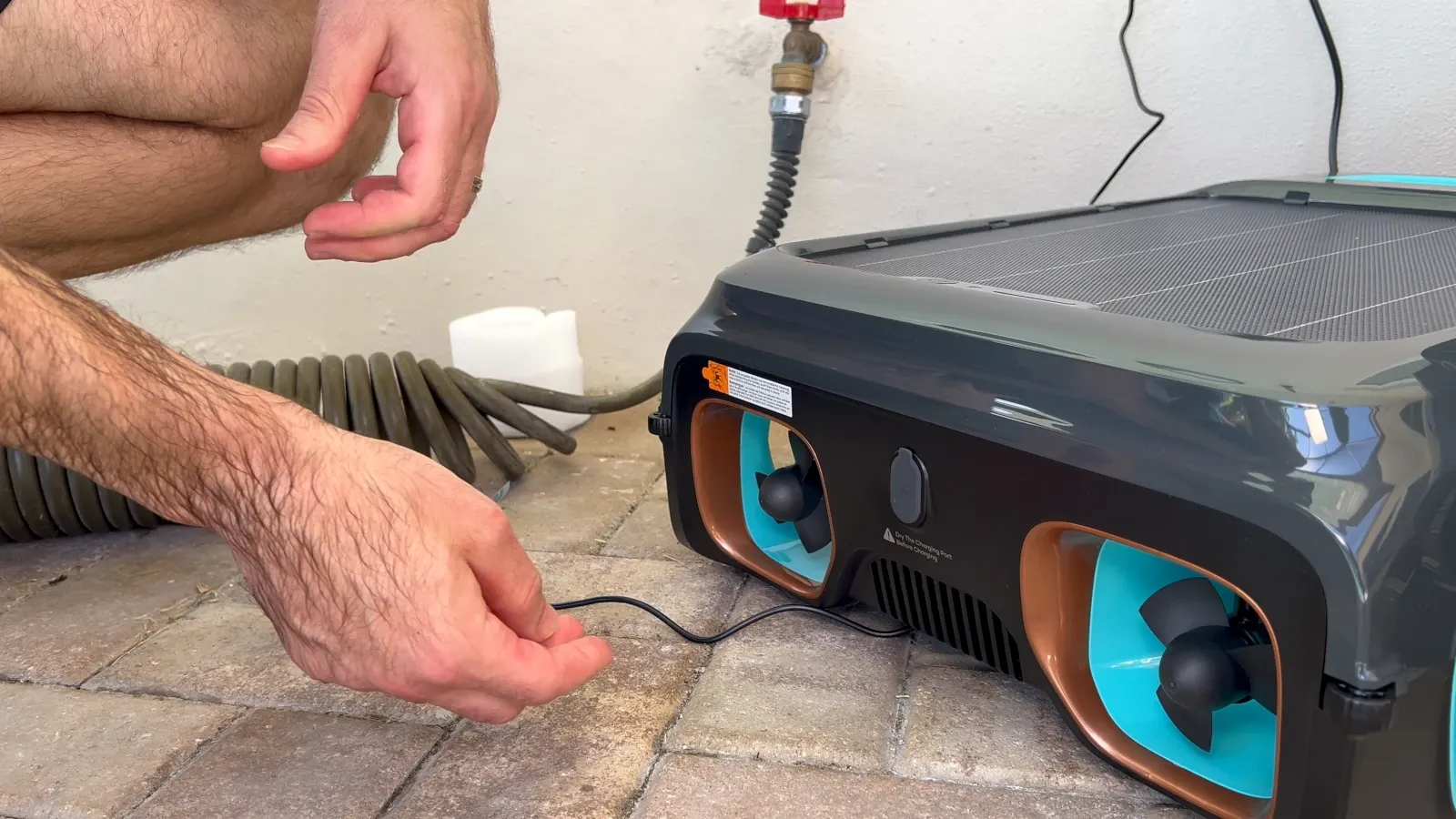
The EcoSurfer S2 was bigger than I expected, it felt closer to a small solar-powered boat than a skimmer (slight exaggeration). In the box: the unit, a full manual, a DC charger, and, oddly enough, a miniature pool noodle. That noodle isn't a toy, it's meant to block your weir entrance so the EcoSurfer doesn't get pulled into the vortex if it drifts too close. The EcoSurfer also has a small chlorine tablet dispenser built into the housing with an adjustable dial that controls how much chlorine it releases while it floats around, plus a debris filter basket underneath that pulls out for cleaning. Since the chlorine tabs eventually degrade the plastic on my floating chlorinator holder, I don't think I'll use that feature, I'll stick with my cheap, easily replaceable floating chlorine tablet holder instead. It is a nice feature though to reduce the number of things floating in your pool to keep a cleaner look.
Scuba V3 and EcoSurfer S2 Setup
Both units needed an initial top-off charge before first use. Setup happens through the Aiper app, which found both devices automatically over Bluetooth initially, walked through Wi-Fi pairing, and asked for pool details, shape, dimensions, volume, water chemistry, so it could tailor cleaning behavior. The Scuba V3 pulled a firmware update during this first setup that specifically called out improved cleaning performance in its release notes, worth letting it finish before your first run.
The Scuba has three cleaning modes: floor-only, auto (which includes wall climbing), and an AI patrol mode that uses the front camera to actively navigate toward visible dirt instead of running a fixed pattern. I set mine to auto since wall climbing was the entire point of the upgrade.
First Run: Scuba V3 and EcoSurfer S2 in the Pool
I pulled the Poolvergnuegen and its hose out of the pool for good, coiled up the hose, and dropped the EcoSurfer S2 in first. It floats, powers on with a single button, and immediately started pulling in the dead ants and bugs sitting on the surface from a recent swarm. It's quiet enough that I couldn't hear it over a neighbor's air conditioner running next door.
One catch worth knowing about: once the Scuba V3 is in the water, it either disables Wi-Fi on purpose or the Wi-Fi, even on 2.4GHz, can't penetrate the water, so the app loses connection to it while cleaning. I couldn't check its stats or change modes without physically hooking it out with the retrieval pole first, which I ended up doing when I realized it had defaulted to floor-only instead of auto + wall. Once switched, it climbed the tile straight up the deep end wall, the exact spot where the Poolvergnuegen's hose had always run out of reach, and started scrubbing off algae that normally only came off with manual brushing. I've never had a cleaner get that high on the wall before.
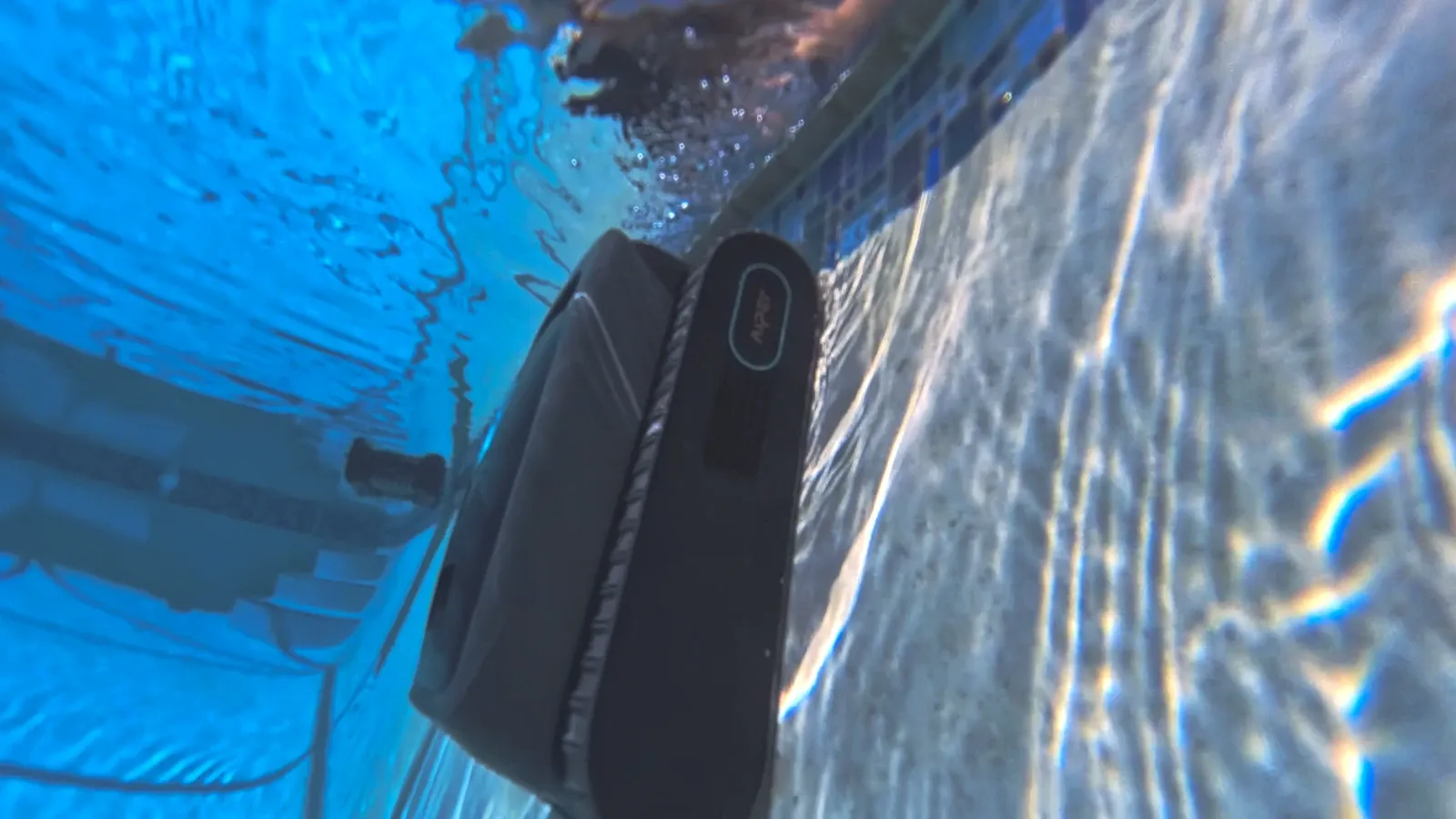
It worked the walls methodically, moving in vertical passes along the pool's contours rather than skipping around randomly. By the time the roughly 80-minute cleaning cycle finished, it had covered somewhere around 90-95% of the pool, not a perfect first pass, but far more of the walls and deep end than the Poolvergnuegen ever touched in years of use.
It did try to climb my 3-tiered steps but the geometry doesn't work out for it so it backs off. That seems to remain a manual brushing task for me.
The EcoSurfer turned out to be the bigger surprise. I let it run for several hours that first afternoon, and its battery percentage actually climbed while it worked, meaning the solar panel was generating more power than the unit was using even filtered through my screen pool enclosure's reduced sunlight. By the second cleaning cycle the next day, I couldn't find a single floating bug left on the surface.
What Came Out of the Filters
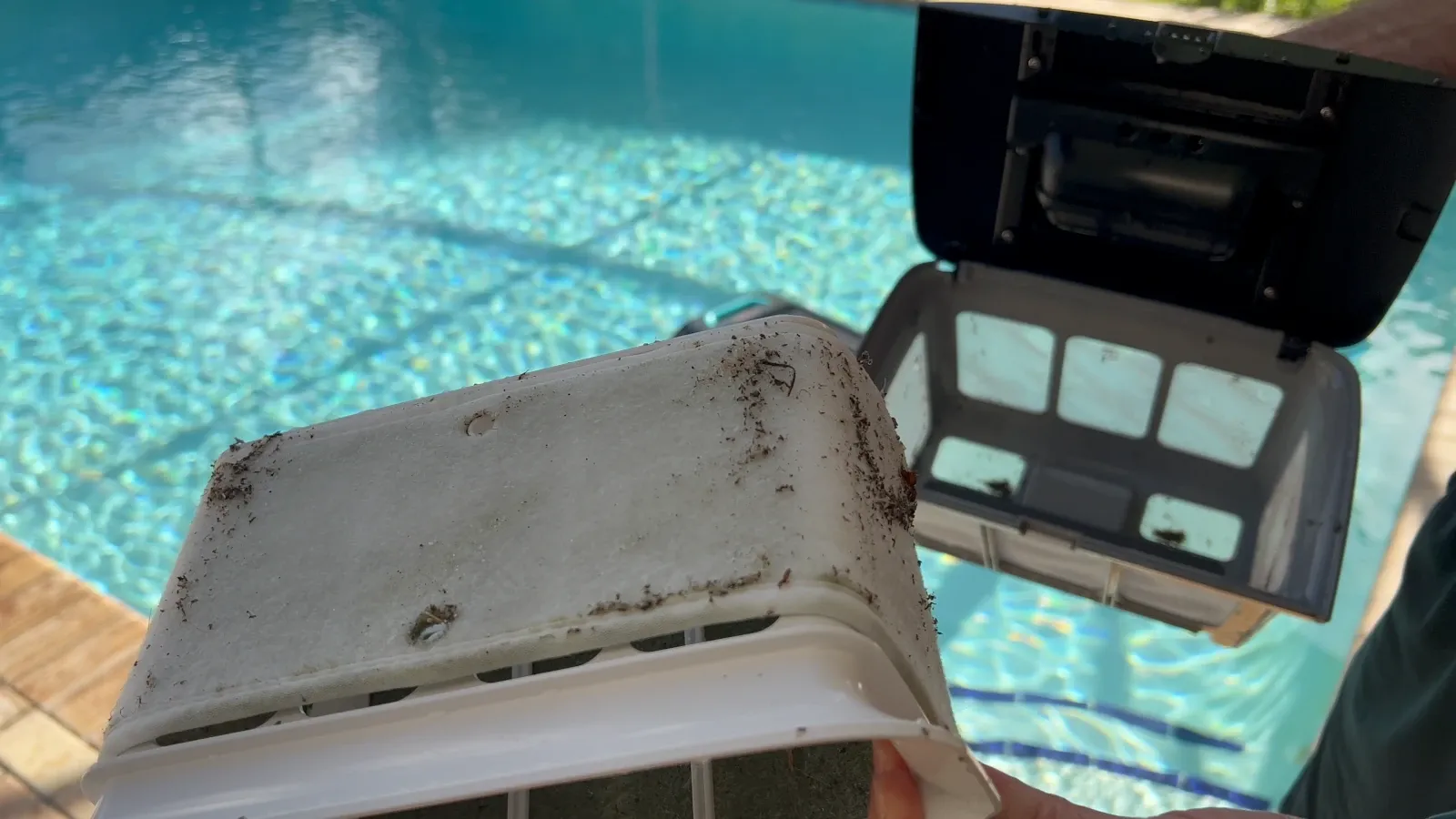
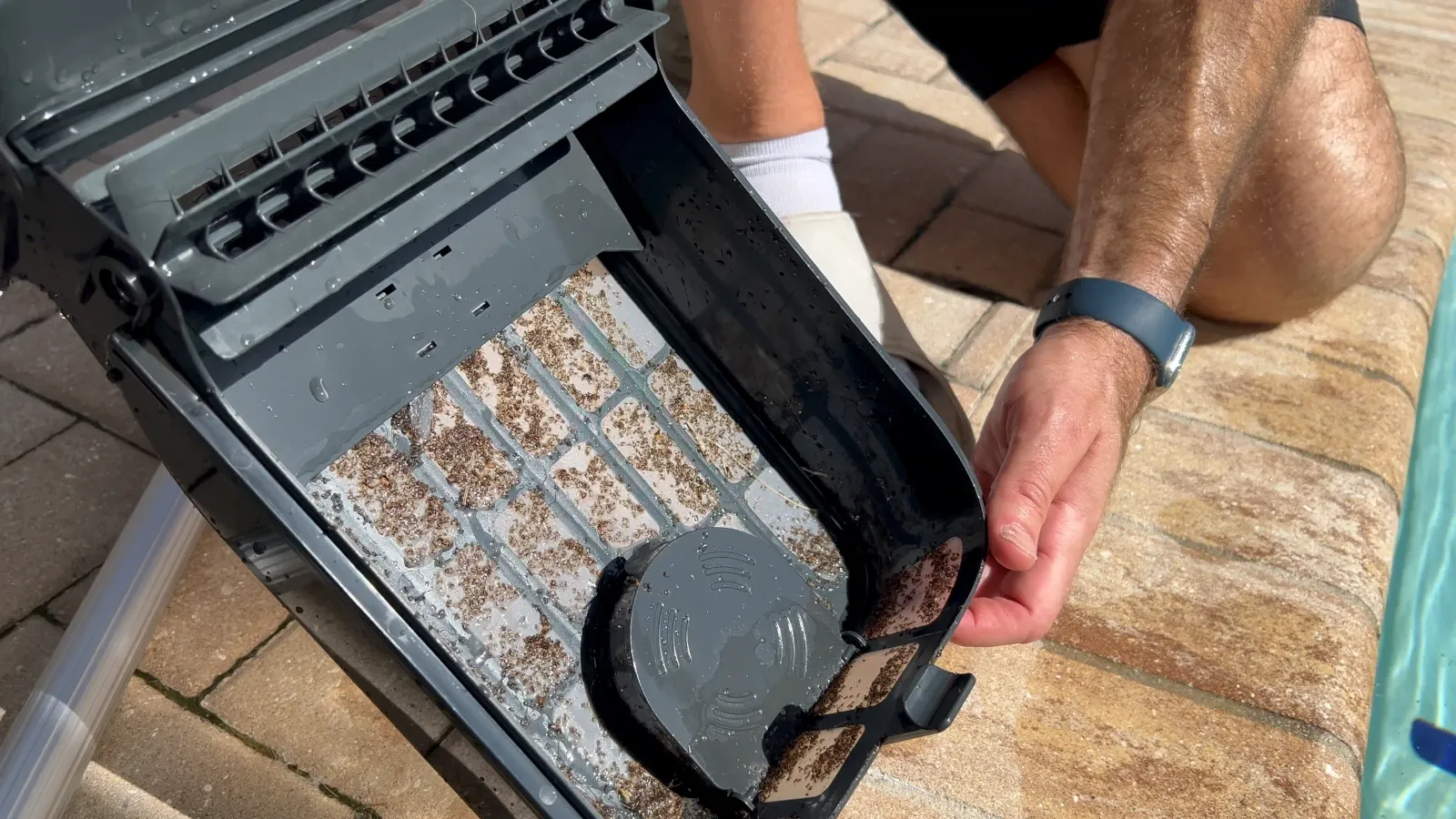
Both robots have pull-out filter baskets, easy to remove and rinse. The Scuba's filter has an inner and outer screen and came out noticeably heavier with water, with a visible layer of algae and sediment caught between the two screens. The EcoSurfer's basket was, frankly, disgusting in the best way, a full afternoon's worth of dead ants and floating debris that used to just sit on my pool surface until I manually netted it out.
First Impressions
A week one review can't tell you about long-term reliability, and that's the real unknown with a newer battery-powered brand versus an established corded one. But on the two problems that actually drove this purchase, wall and deep-end coverage, and the constant floating bug cleanup, the Aiper Experts Duo did in one day what years of suction-side cleaning never managed. Based on my testing, it is the best robotic pool cleaner for my pool. I'll follow up once I have more runtime on both units to see how they hold up.
Tying back to my buying criteria:
- ✅ Climbs walls
- ✅ Runs on battery, no cord to manage
- ✅ Effective cleaning pattern
- ✅ Gets rid of surface debris and bugs
- ⏳ Battery health long-term, good so far, still too early to tell
- ⏳ Reliability and warranty service, time will tell
If you're on the fence like I was, you can check current pricing on the Scuba V3 and EcoSurfer S2 here.