
Gable Attic Fan Replacement, 3 Years Later
Replacing a seized gable attic fan: why intake venting matters most, CentricAir vs QuietCool, and three years of real attic temperature and humidity data.
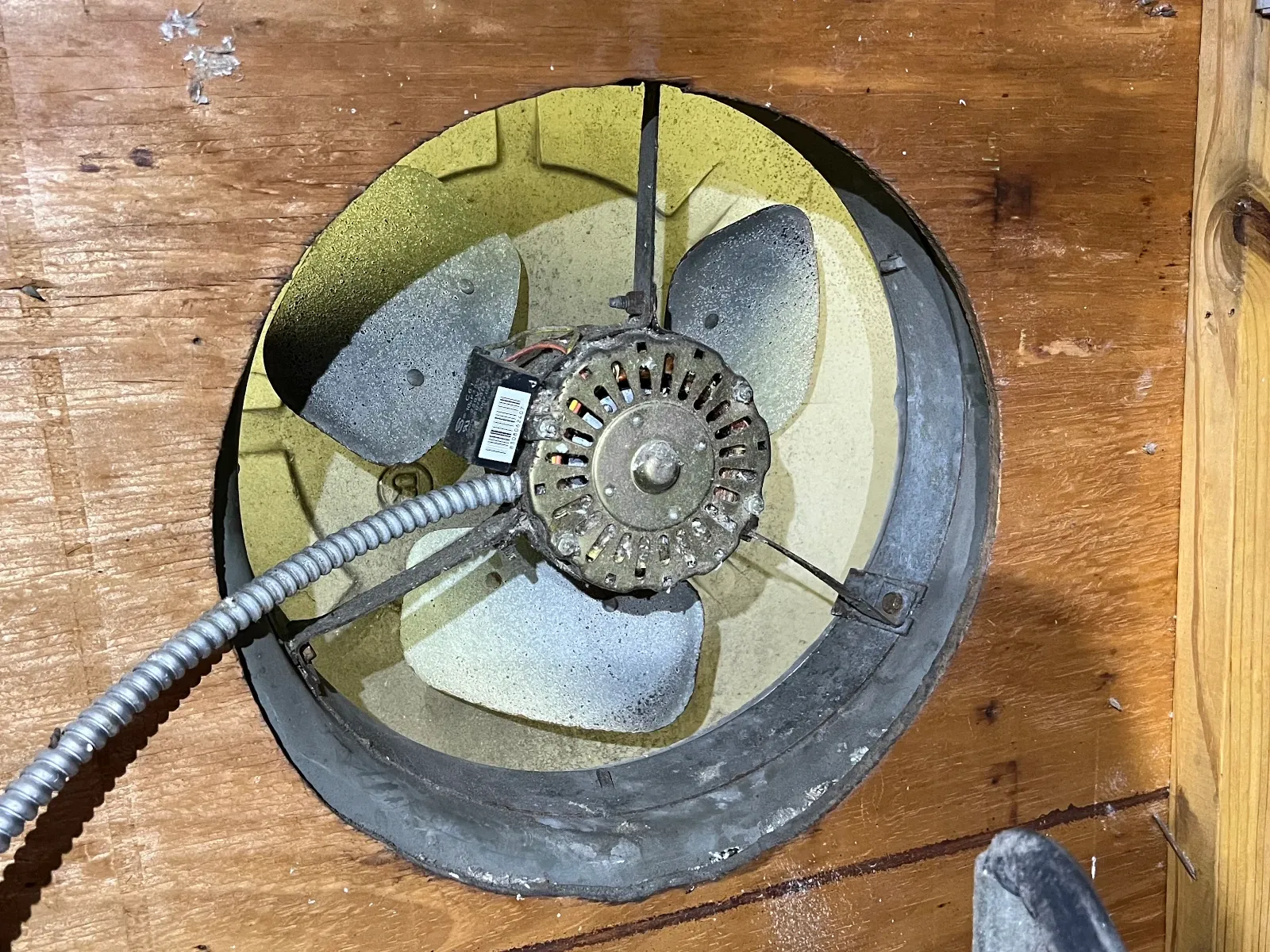
The gable attic fan that came with my house finally died. The motor seized completely. Rather than replace it with whatever was cheapest, I used it as an excuse to actually research this topic, because gable fans are a surprisingly divisive subject online. This is what I found, what I installed, and three-plus years of real attic temperature data on whether any of it mattered.
On a hot afternoon an unvented attic can climb past 130°F, and all that heat radiates down through the AC ducts and the ceiling insulation into the rooms below, forcing your AC to run longer and harder just to keep pace. It's the same problem I've chased in other parts of the house with portable AC efficiency fixes and garage door insulation. A gable fan is one of the cheaper ways to cut that extra AC runtime without touching the AC unit itself, but if you've searched this topic you've probably run into two camps: people who swear a gable fan changed the temperature of their whole house, and people who insist gable fans are useless or make the problem worse by actively pulling conditioned air out of your living space, making it hotter inside. Both are technically right, but it depends on whether your attic has enough intake venting to match the fan.
The Critical Prerequisite: Intake Venting
Matching your intake venting to the exhaust CFM of your attic fan is the most important part of the selection process. An attic fan exhausts hot air out through the gable or roof deck, and that air has to be replaced from somewhere. If your soffit and ridge vents can't supply enough intake air, the fan depressurizes the attic and starts pulling air from wherever it can find it, including up through gaps around your ceiling fixtures, recessed lighting, attic hatch, and top plates. At that point the fan is pulling conditioned air out of your living space and into the attic, and that lost conditioned air gets replaced by unconditioned, humid outside air leaking back into your living space to equalize the negative pressure.
This negates the efficiency of having an attic fan in three ways:
- It's probably oversized for the space causing the fan to use more electricity than needed (relative to a fan with a smaller motor)
- It's sucking air conditioning out of your house
- It's drawing unconditioned air into your living space which needs to be cooled, again, by your air conditioner
The general calculation to ensure this doesn't happen is to ensure the intake vent Net Free Area (NFA) should match or exceed the fan's CFM rating, using roughly 1 square foot of NFA per 150 CFM. For example, a 1,580 CFM fan needs about 10.5 sq ft of NFA across your soffit and ridge vents combined. This attic fan intake vent calculator makes this less complicated and easier to follow.
The simplest option is to choose the correct size fan to match your existing soffit and/or ridge venting, but one may also be able to add more venting to allow the use of a more powerful fan to reach the recommended CFM for a given attic size.
Sizing: How Much CFM Do You Actually Need?
Before comparing products, it helps to know your target CFM. As a starting point, plan on roughly 0.7 CFM per square foot of attic floor area in a standard climate, or up to 1.0 CFM per square foot in consistently hot climates (Florida, Arizona, Texas, and similar). Use the attic fan CFM sizing calculator to get a number for your attic. This is how I ended up between the CentricAir and QuietCool Solar fans below for my particular house.
What I Compared
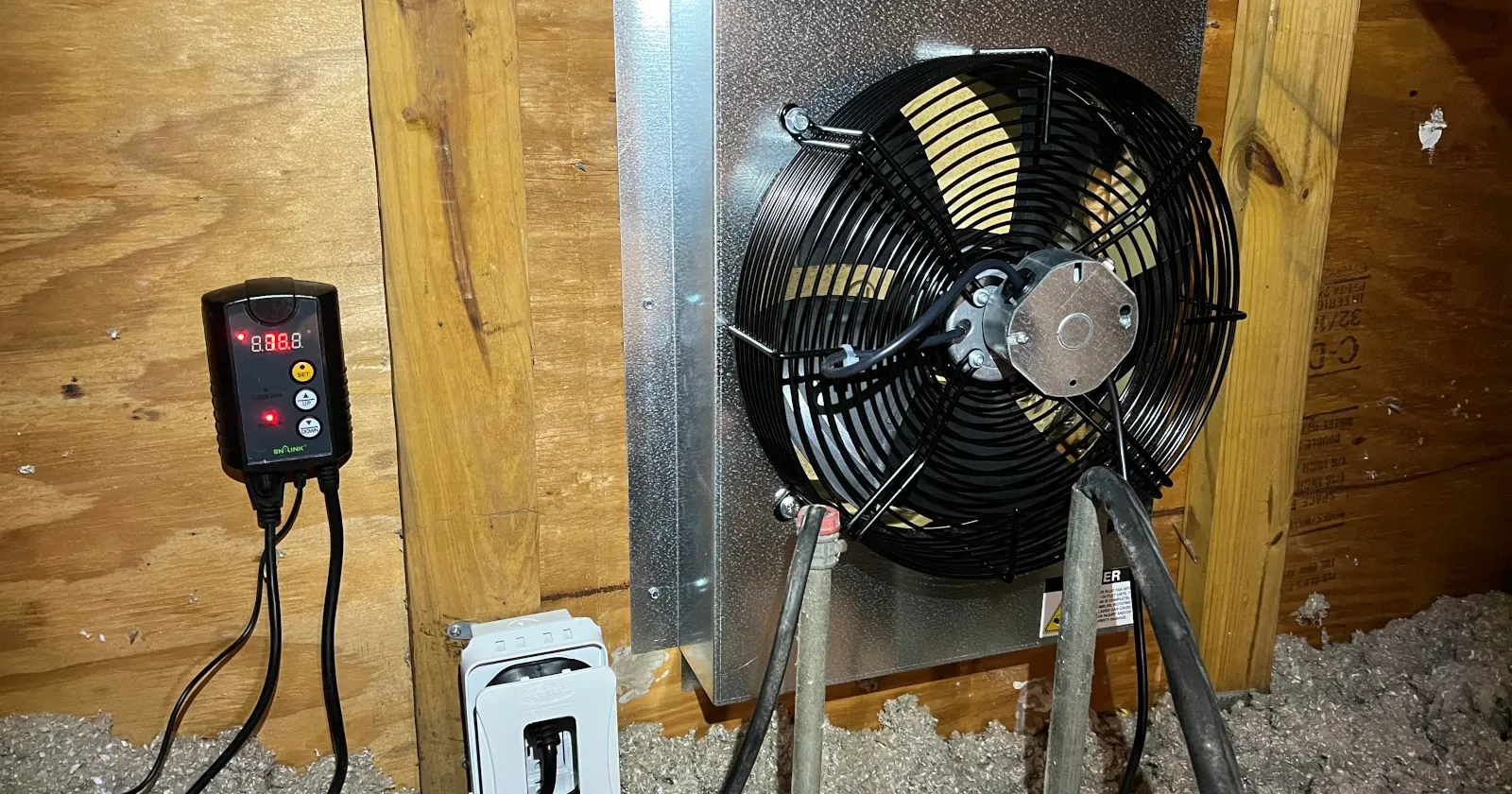
CentricAir Gable Mounted Attic Fan (what I bought)
- 1,580 CFM at 180W
- Adjustable thermostat included
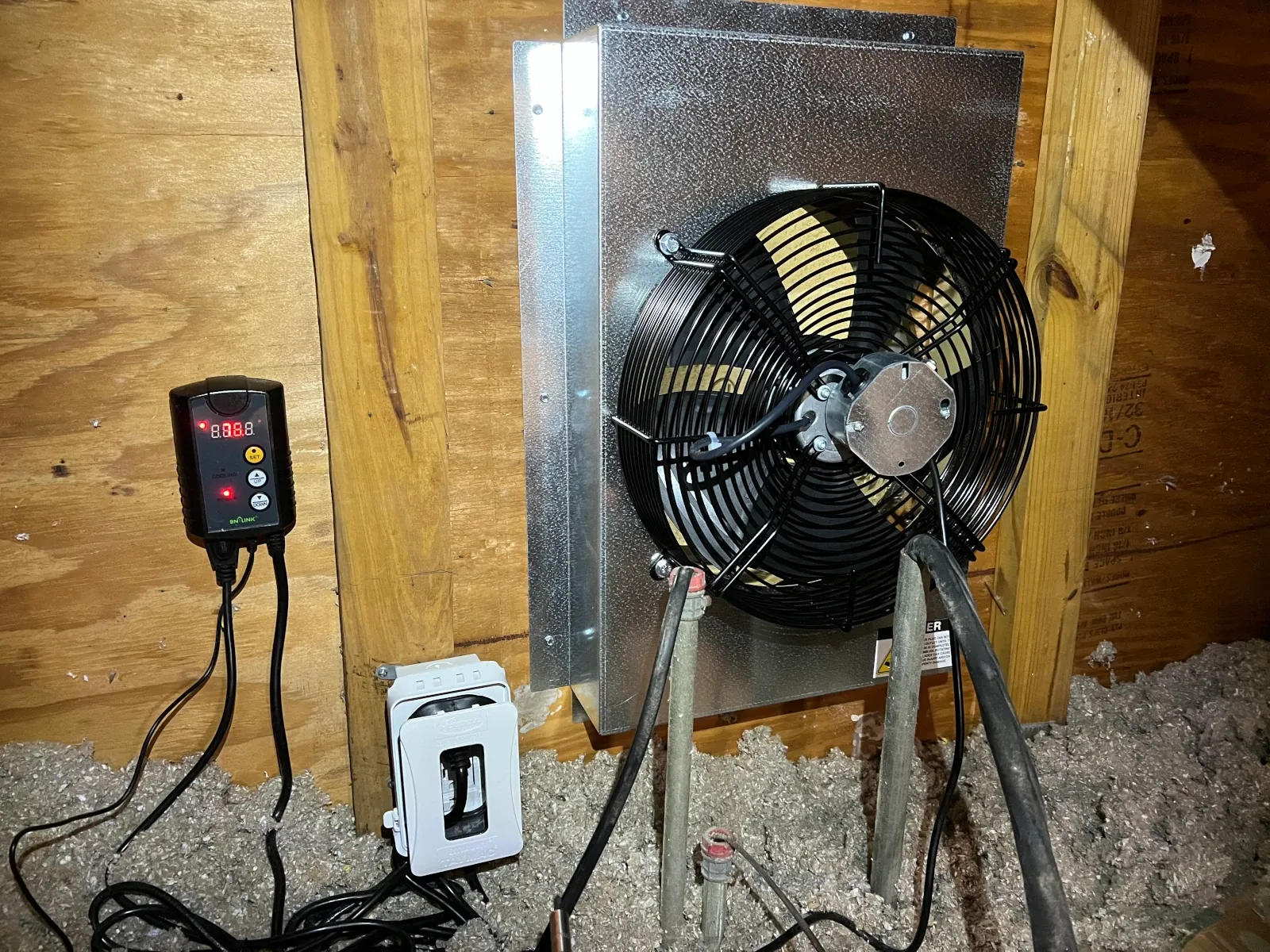
- Premounted enclosure that dropped directly into the existing gable opening
- Standard corded plug, no hardwiring required
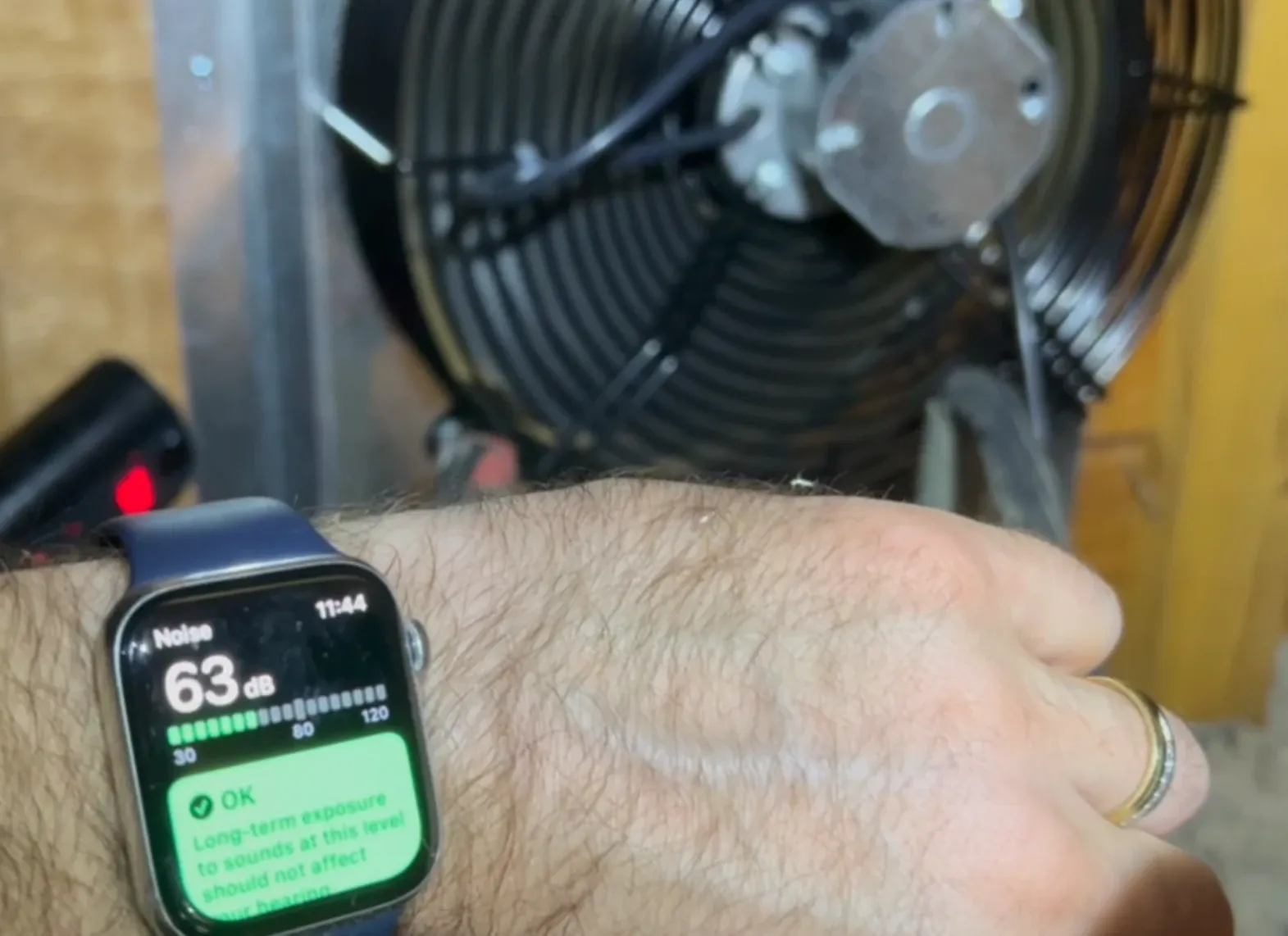
- Noticeably quieter than both the original seized fan and the QuietCool, with no vibration (measured 63 dBA running, using the Noise app on my Apple Watch)
- Low profile fit the space constraints that ruled out the QuietCool
- 5-year warranty, installed January 2023, zero issues since
CentricAir product page · buy on Amazon
QuietCool Gable Fan (tried first, returned)
An excellent fan on paper, and was my first choice, but it was physically too large for my existing attic space because of the drum design. There wasn't enough depth clearance so I had to return it. Measure your opening before you order.
- Up to 2801 CFM at 142W (adjusts speed based on attic temperature)
- Standard Corded Plug
- Smart App control
It moved a ton of air when I tested it out on my test bench before finding out it wouldn't fit in my gable location.
QuietCool Gable Fan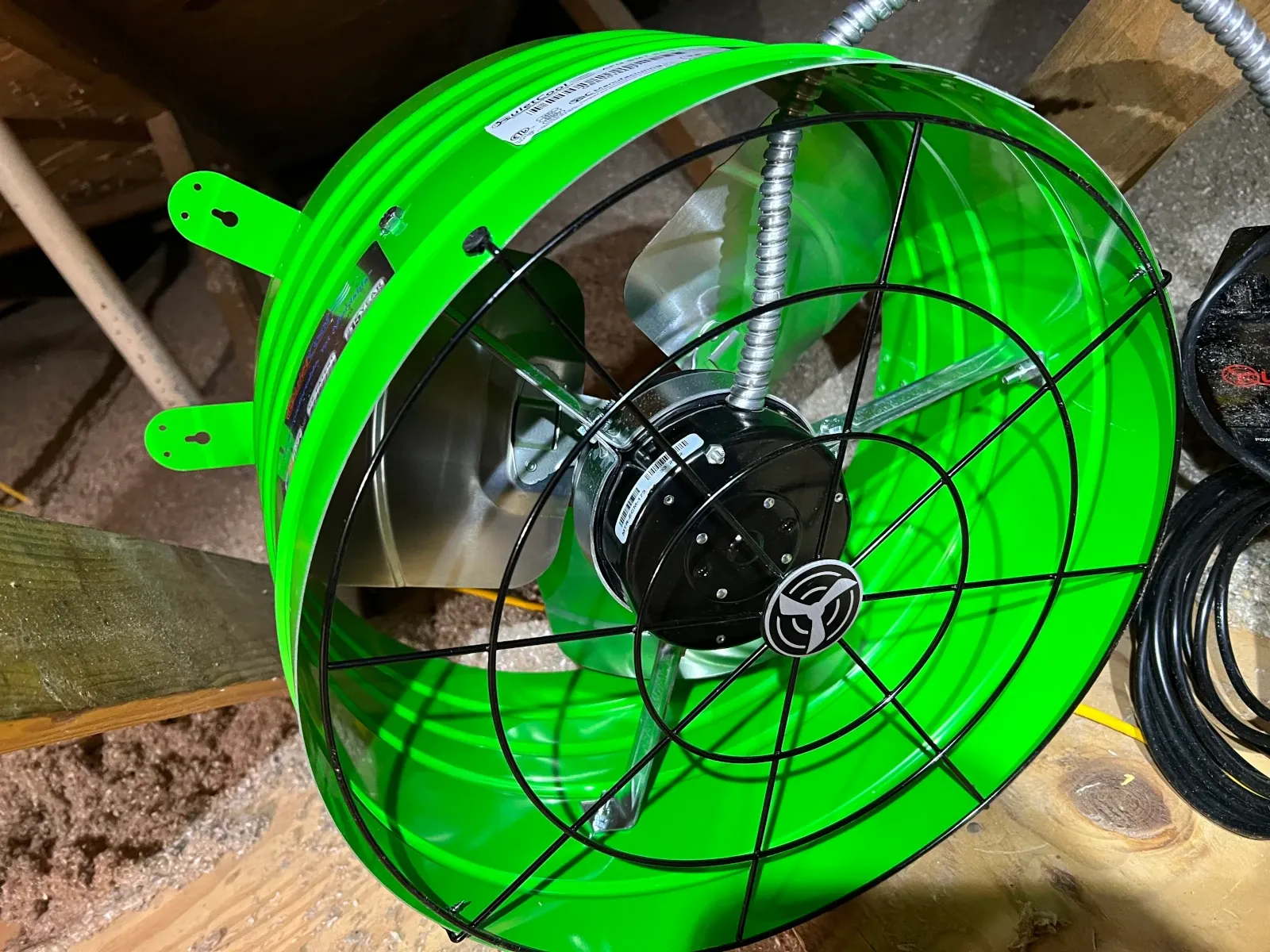
QuietCool Solar AFG-SLR-40 (considered, didn't go with)
- 1,566 CFM, 58.4W under AC power
- 15-year warranty, three times the CentricAir's coverage
- Hybrid solar/AC: a 40W panel offsets usage in the sun, and it cuts over to AC power when solar output drops too low
- Solar and AC don't combine: it's one or the other, not both stacked together
- In real-world conditions, a 40W panel is unlikely to ever drive the fan at full speed; expect variable speed tied to available sunlight
If offsetting the long-term operating cost matters more to you than the CentricAir's simplicity, and you're comfortable mounting a panel, this is worth a look: the 15-year warranty alone is compelling. Being solar, it removes the electricity cost argument people raise with actively powered fans. The power AC-powered models use to run the fan itself eats into any cost savings.
Ultimately I decided against solar due to my hurricane exposure in Florida making solar panel mounting more difficult.
QuietCool Solar AFG-SLR-40 · spec sheet (PDF)
QuietCool Roof-Mount Solar (for homes without a gable opening)
If you don't already have a gable vent (or don't want to cut one), this roof-mounted solar option skips the gable requirement entirely. The tradeoff is a roof penetration, which is worth weighing carefully if you're in a fire-prone area where ember intrusion through roof vents is a real concern. A roof penetration is also a seam in your roofing that has to stay sealed for the life of the fan, so it carries more risk of a rain leak over time than a gable mount, which sits in a wall opening under the roofline instead of through the roof deck itself.
QuietCool Roof-Mount SolarGable Mount vs. Roof Mount
| Factor | Gable Mount | Roof Mount |
|---|---|---|
| Roof penetration | No | Yes |
| Leak risk | Lower, no roof penetration | Higher, flashing/seal needs ongoing maintenance |
| Fire risk (ember intrusion) | Lower | Higher in fire-prone areas |
| Install complexity | Lower if a gable opening exists | Higher |
| Aesthetics | Hidden inside the gable | Visible on the roof |
| Performance | Good with matched intake venting | Good with matched intake venting |
Replacement Gable Fan Installation Notes
Since the attic's gable opening already existed from the original fan, this was a direct swap rather than a new cutout:
- Measure the existing gable opening before ordering anything. Including clearance depth, this is exactly where the QuietCool didn't work out for me.
- Remove the old fan unit. In my case I was able to unbolt the fan and motor assembly.
- Set the CentricAir's premounted enclosure with the fan centered over the opening and secure with appropriately sized fasteners to the attic sheathing at the predrilled locations in the enclosure box flaps.
- Plug it into the existing outlet. If your setup doesn't already have an outlet near the gable from a previous fan, budget for adding one.
- Mount the thermostat probe somewhere in the attic that reads representative ambient temperature, not directly in the fan's airflow, or it will underread how hot the attic actually gets.
- Set the thermostat. I run mine at 100–110°F, which captures peak heat hours without running the fan all day. I adjust it seasonally to a lower setting in the cooler months to help with circulation of the attic air and raise it in the summer to keep it from running constantly.
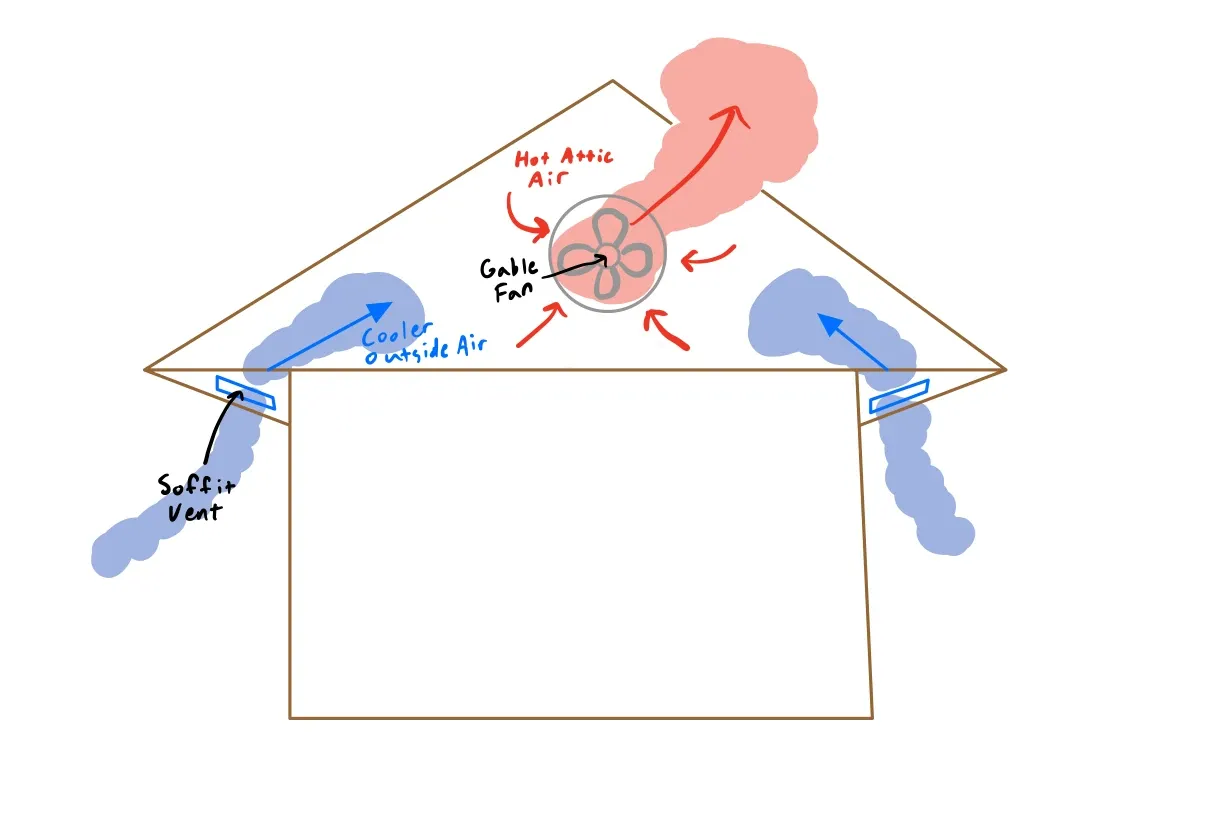
The Attic Airflow Path, and What Goes Wrong Without It
Below is an illustration of the airflow path of an actively vented attic space when the soffits and exhaust fan are properly matched and working together. Ideally the calculated attic intake exceeds the CFM capabilities of the fan. The attic gable fan forces the stale heated air out of the attic space which is replaced by relatively colder fresh air from the outside via the soffits and/or ridge vents.
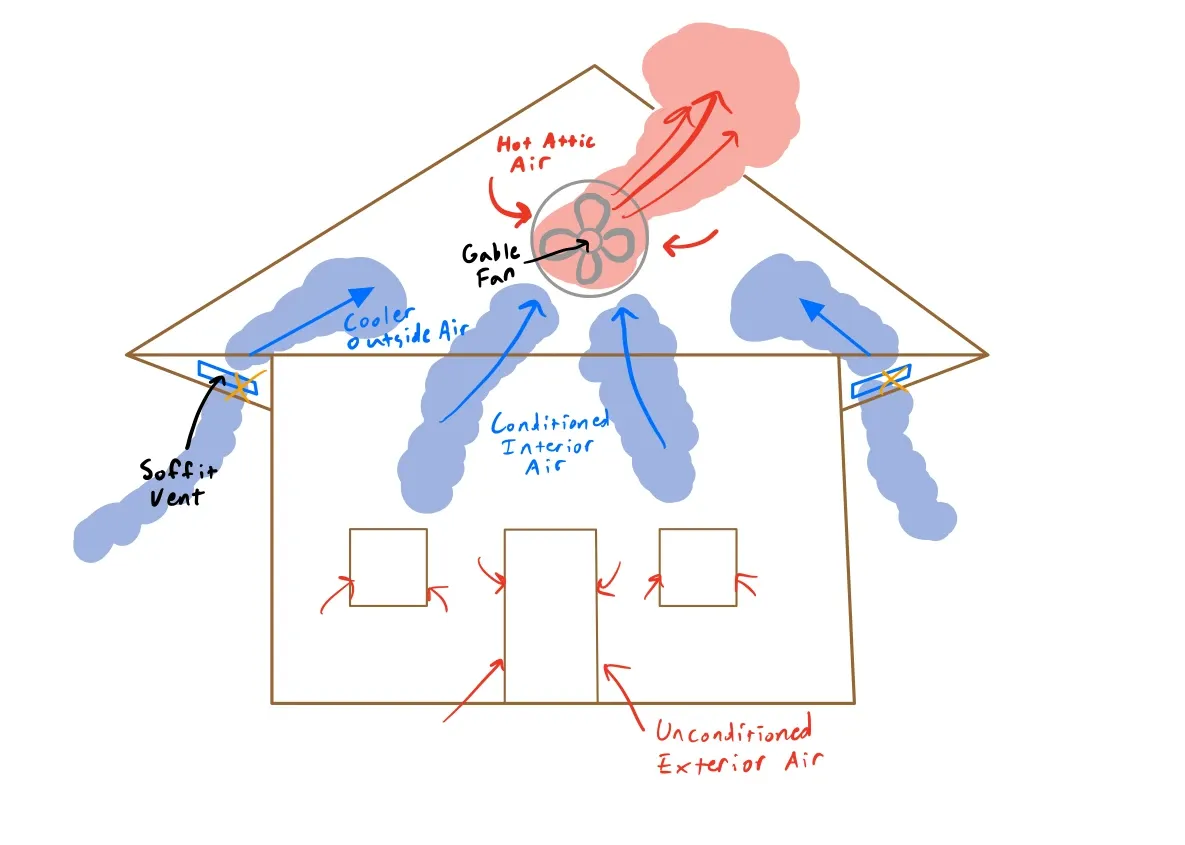
This is different than the illustration below, showing what can happen when there aren't enough intakes available to provide the make-up air needed to keep the air exchange happening within the unconditioned attic space. Negative pressure forms in the attic, which can draw unconditioned air in through gaps between your attic and living space, in turn pulling conditioned air out of the living space to equalize that pressure.
Keep in mind blocked soffits can also cause this to occur, even when it appears on paper you have adequate intakes. This can happen if blown-in insulation covers the soffits or you're missing baffles, etc.
Three Years of Real Temperature and Humidity Data
I have a SwitchBot temperature and humidity probe sitting in the attic year-round to see how effective the gable fan actually is.
You can see the repetitive sawtooth pattern: temperature in the attic slowly builds throughout the day until the thermostat probe turns the attic fan on, keeping the attic from getting much hotter than 104–105°F. This July it's been 95–97°F outside.
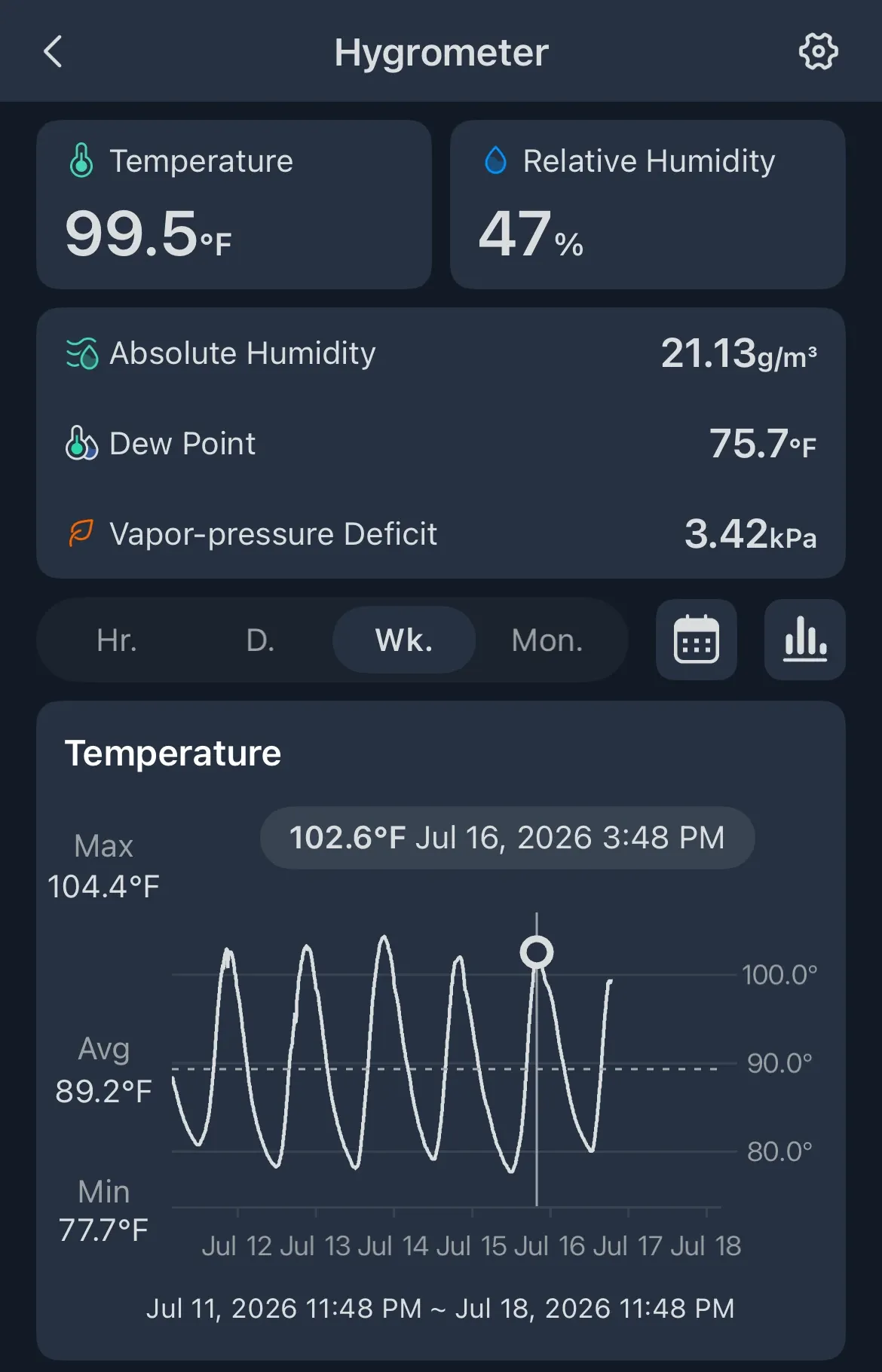
The lower humidity chart shows the other benefit of actively venting the attic space: keeping the humidity down, which helps prevent mold growth. The sawtooth pattern with drop-offs in relative humidity corresponds to when the gable fan is actively running.
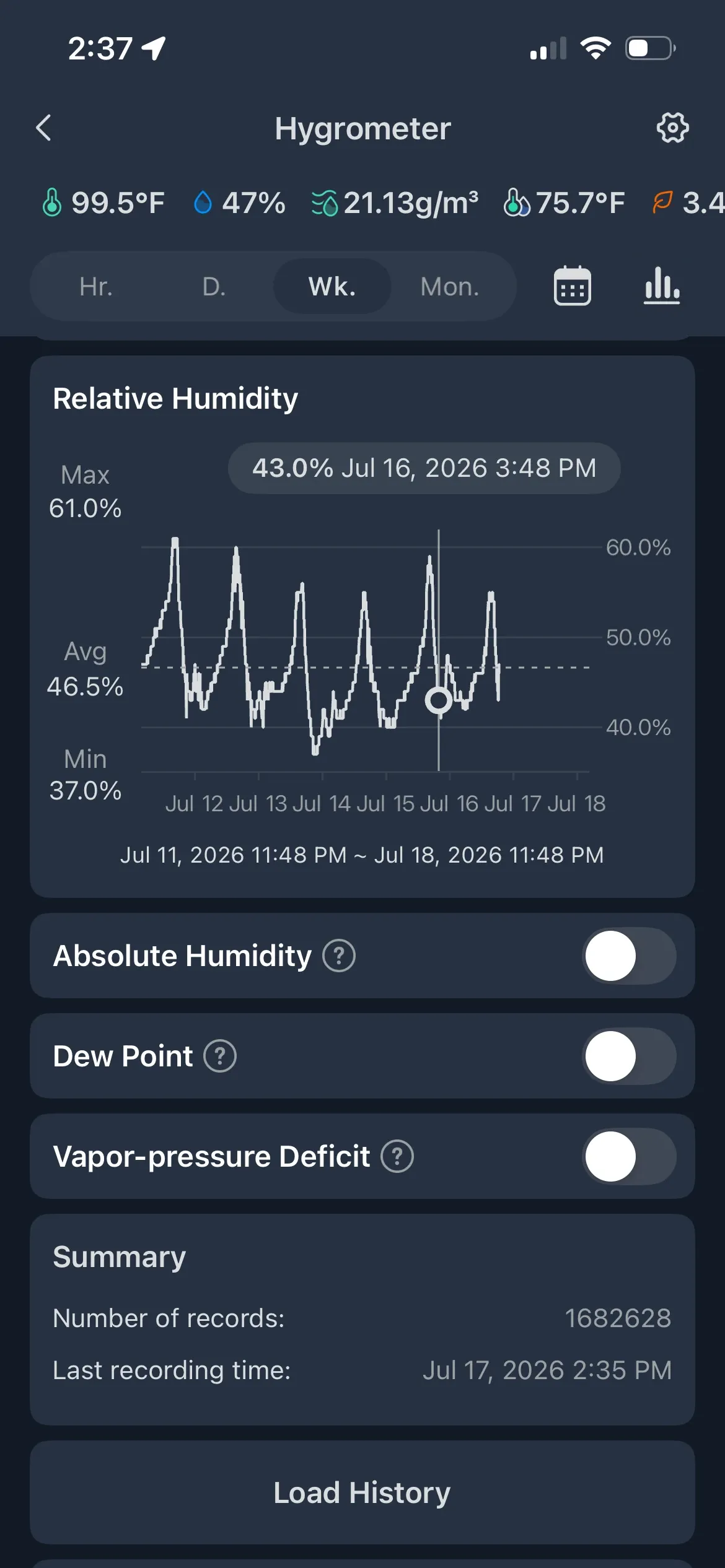
The pattern is consistent: attic temperature climbs through the morning, the thermostat kicks the fan on once it crosses my setpoint, and both temperature and humidity drop noticeably over the next hour or two. I haven't isolated the exact impact on my electric bill (too many other seasonal variables to attribute it cleanly), but the reduction in peak attic heat is real. If nothing else, electricians and plumbers I've had working in the attic have appreciated the gable fan. 😅
Results After 3+ Years
- Installed January 2023, running through multiple full summers with zero mechanical issues
- Meaningfully cooler attic during peak afternoon heat, consistent with the SwitchBot data above
- No signs of the negative-pressure problem: no conditioned air being pulled up from the house, because the existing intake venting was already adequate
- Noticeably quieter and smoother than the original builder-grade fan, with no vibration transmitted into the structure
If you're replacing a dead fan or installing one for the first time, check your intake venting before you buy anything: that's the one thing that decides whether this actually works to cool your attic efficiently or ends up as a net expense.